My grandpa Harry, back in rock: an old fisheye photo on a t-shirt
Somewhere in the early 2000s, on a bright day in a garden, someone pointed an old Canon digital camera with a fisheye lens at two brothers. The one in front, so close that the lens bends him, is my grandpa Harry. The one on the right, in the light vest and the checked shirt, is his twin, Hugo.
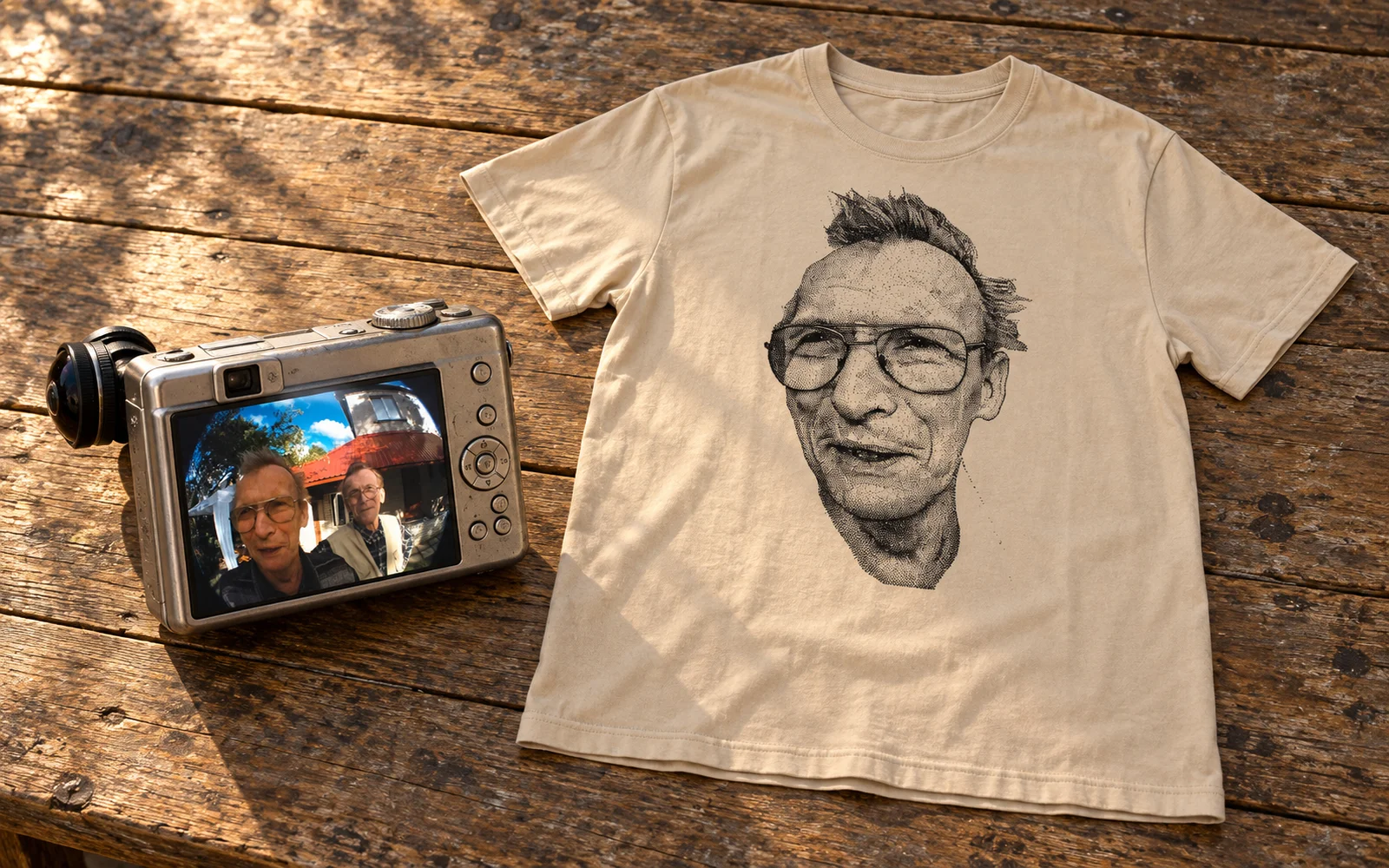
By every rule of photography it is a bad picture. The fisheye curls the roof and swallows the corners in black. The copy we have is 1600 pixels wide and soft all over, and the colours are whatever that camera decided they were. Harry is half a step too close and halfway through a sentence, his hair standing straight up.
I would not trade it for a sharp one.
From a bad photo to a good shirt
I cut Harry out of it, a crop of 690 by 924 pixels, not even one megapixel, and gave it to the shop's photo door.
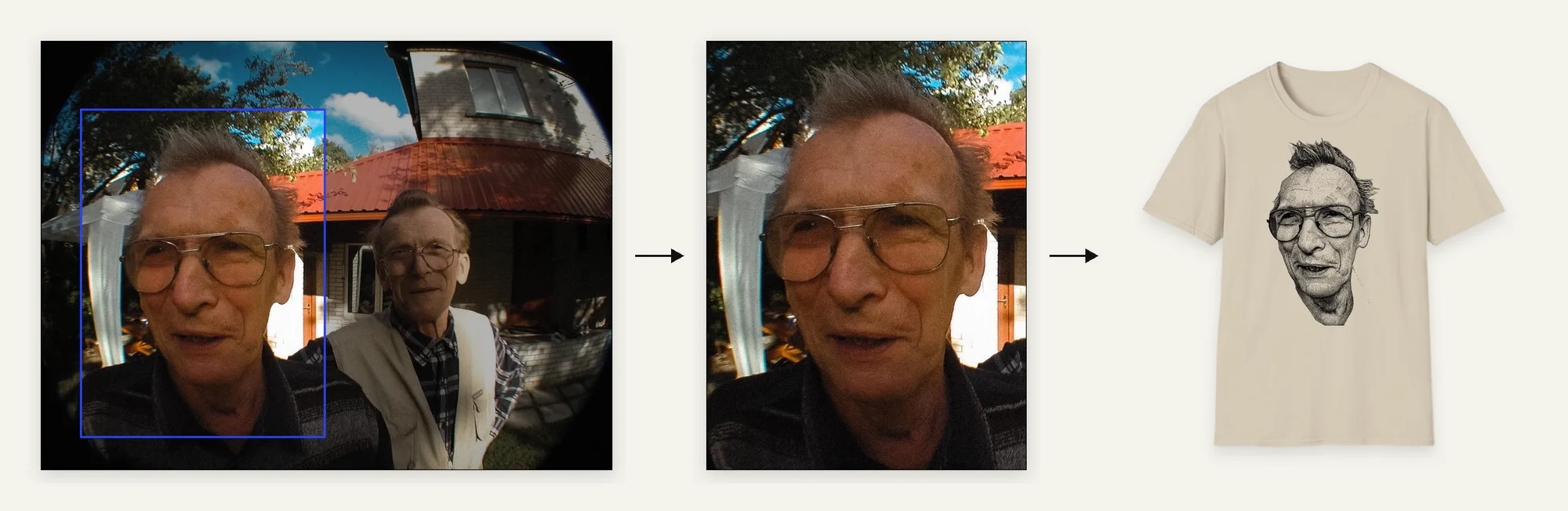
This is where an old photo has an advantage. The shop does not try to rescue it, sharpen it or fix its colours. It draws the face again, in black ink dots, and everything that is wrong with the photograph has nowhere to go. What stays is what you know someone by: the big aviator glasses, the cheekbones, the grin. And the hair, which the dots turned into something very close to a mohawk.
My grandpa came back as a rock star.
When my older brother saw the shirt, he said: order me one in L. Right now.
If you have a photo like this
Every family has them: pictures from the first digital cameras, birthday snaps, scans of prints from a shoebox. Small, soft, the colours slightly off. They make better shirts than you would expect.
- Crop to one face. The drawing is made from what is in the frame, so Harry alone works better than Harry, Hugo, a roof and a gazebo.
- Don't worry about sharpness. Ours was under a megapixel. What matters is that the eyes and the mouth are there.
- Don't fix the colours. The drawing is black ink, so the colours of the original never reach the shirt.
- Keep the strange lens. The bend of the fisheye is part of what makes it look like him.
Tap Use a photo on the front page, and bring someone back to rock.