One drawing, one shirt: how a prompt becomes a t-shirt nobody else can buy
Type a few words and a drawing appears on a shirt. That part takes about ten seconds and it is the part people film. The part that took us months is what happens around those ten seconds: how the drawing is made so it prints well, why it is drawn in dots, and why the shirt you buy is one nobody else will get.
Every drawing is dots
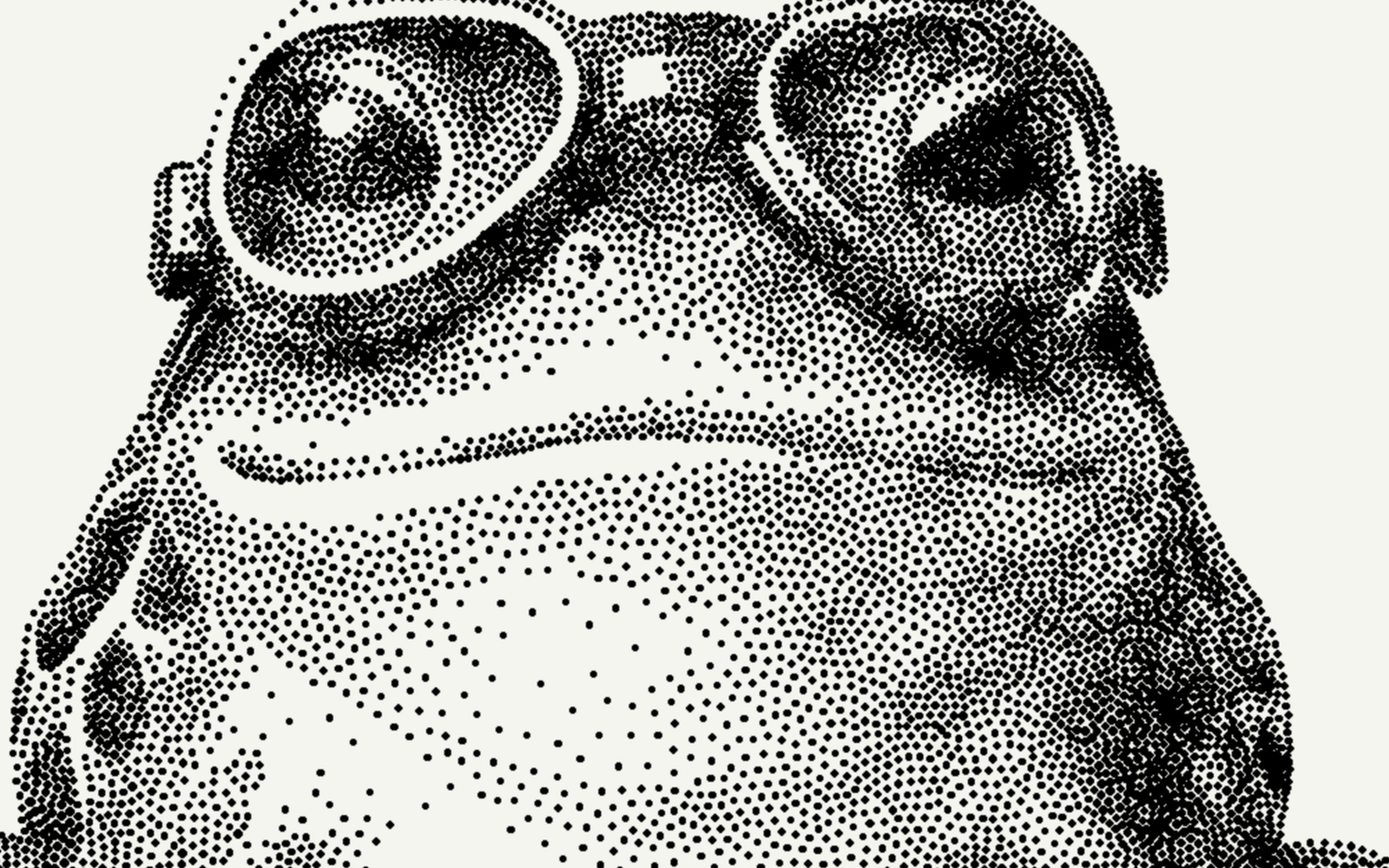
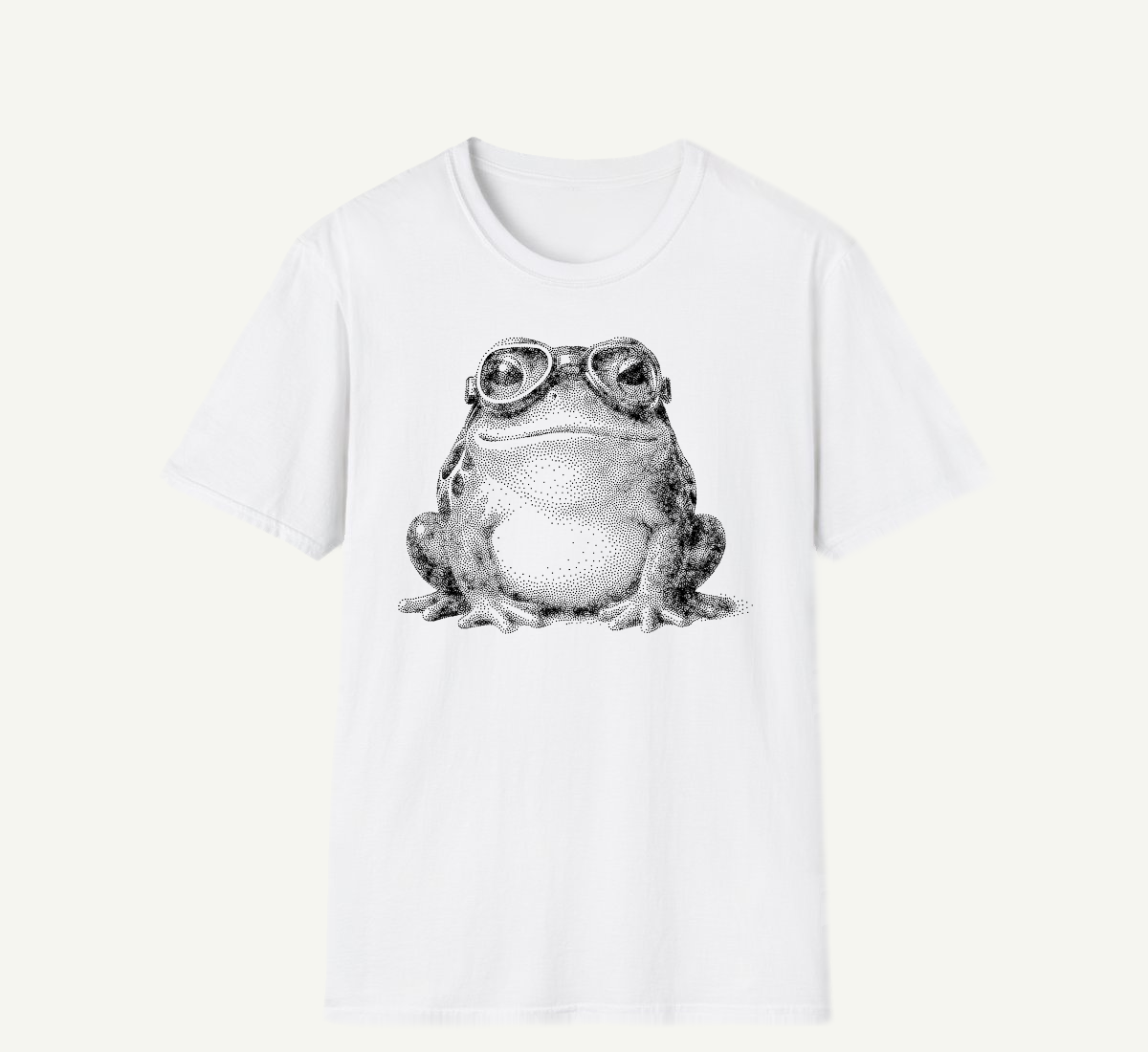
Look closely at any lookunique shirt — the frog above was asked for as a fat frog with pilot goggles — and the picture comes apart into dots. Not a halftone photo, not a filter over a drawing — the drawing is the dots, laid one by one, dense where the picture is dark and sparse where it is light, with paper showing between them.
We chose that on purpose, before the shop had a name. A shirt is a bad place for a painting: fine gradients turn to mud in ink, thin lines break on cotton, and a full-colour print on a tee tends to look like a sticker. Dots behave. Each one is a small solid mark that prints cleanly, the picture reads from across a room, and up close it looks like something a person sat and made — because the spacing of the dots is the whole drawing.
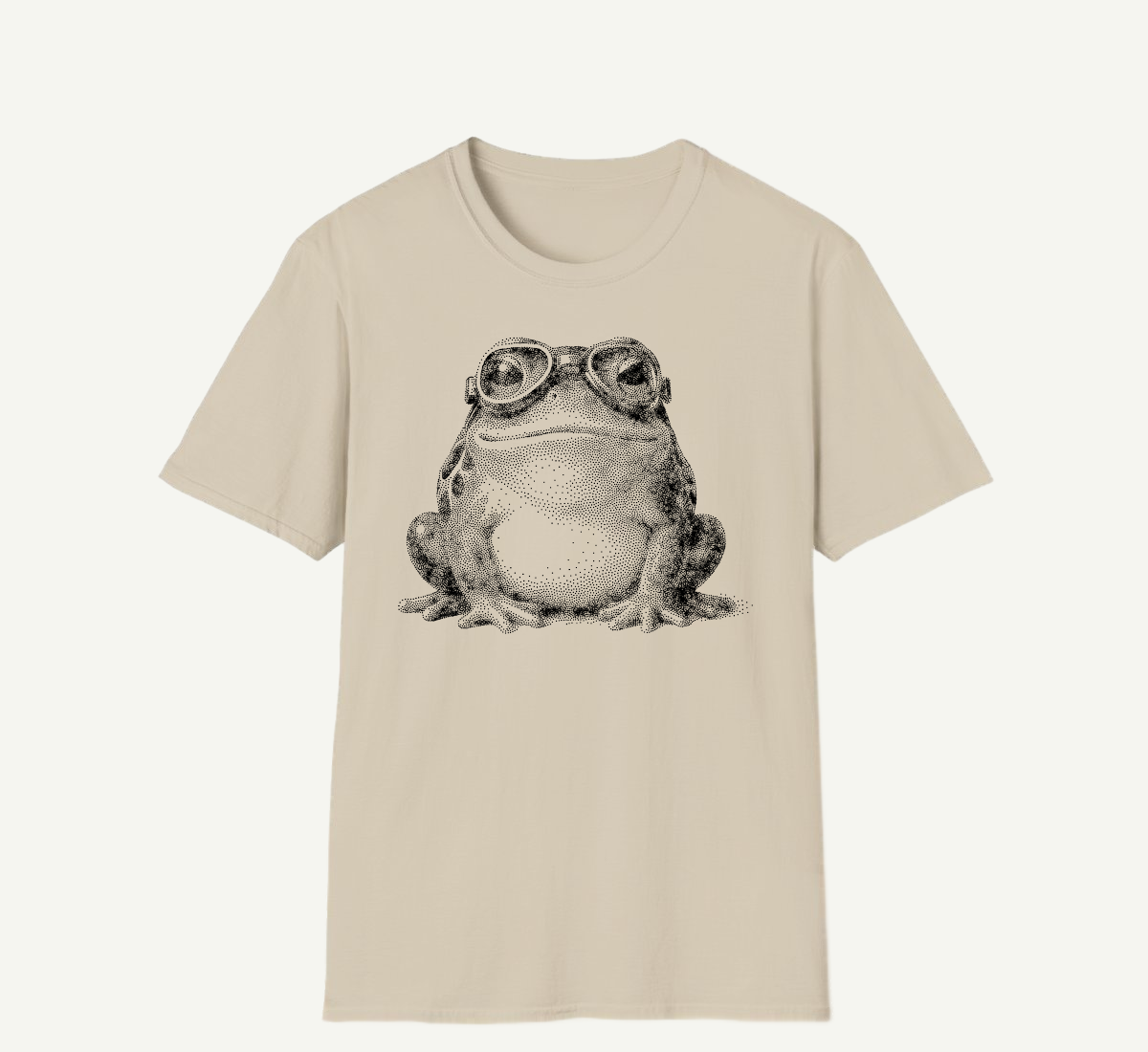
It also means one colour of ink. On a light shirt the dots are black; on a dark shirt they are bone, with a soft field under the drawing so it sits in the cloth instead of floating on it. One ink, every shirt, and a drawing from this shop is recognisable without a logo on it.
From your words to the drawing
You type a line — a sentence, in any language — and a model we run on our own machine reads it first. It is not making art yet; it is making sure it understood what you meant, and it will say no to a few things (a real person's face from a name, a brand, anything we would not want to print). Then it draws. Not one picture: four takes on the same idea, from different angles or moments, because the first drawing is rarely the one you fall for. "Another one" moves to the next.
The first take is on the shirt in about ten seconds. The others follow behind it. Nothing you typed is sent anywhere else: the drawing happens on a machine in Tallinn, on our own electricity, and the prompt stays with the drawing.
You can also start from a photograph — the machine redraws it in the same dots, which is the way to get a dog or a person you love onto a shirt without it looking like a printed photo — or from words alone, set in the same dots, for the people who know exactly what the shirt should say.
One drawing, one owner
This is the rule that makes the shop what it is. When you buy a shirt, that drawing leaves the shop. It is not offered to anyone else, ever. You can have it again yourself — another colour, another size, one for a friend — but nobody else can order it.
It cuts both ways. Because every shirt is printed only after you order it, for you, with a drawing that then belongs to you, there is no shelf to put it back on. So there is no 14-day change-of-mind return here, and we say so before you pay. If a shirt is faulty, misprinted or not what we promised, that is ours to put right, for two years, at our cost — personalisation changes nothing about that.
The shirt itself
A Gildan tee in eight colours, printed to order in Germany and posted to you with tracking. €34.90, and a second shirt in the same order takes ten percent off the lot. Four cuts — unisex, women's, premium and kids — with the printer's own size chart on the page, because a shirt that does not fit is the one thing we cannot fix after the fact.
That is the whole shop. A prompt, four drawings, one shirt, one owner. Try a prompt — drawing is free, and you only pay if you want to wear one.